

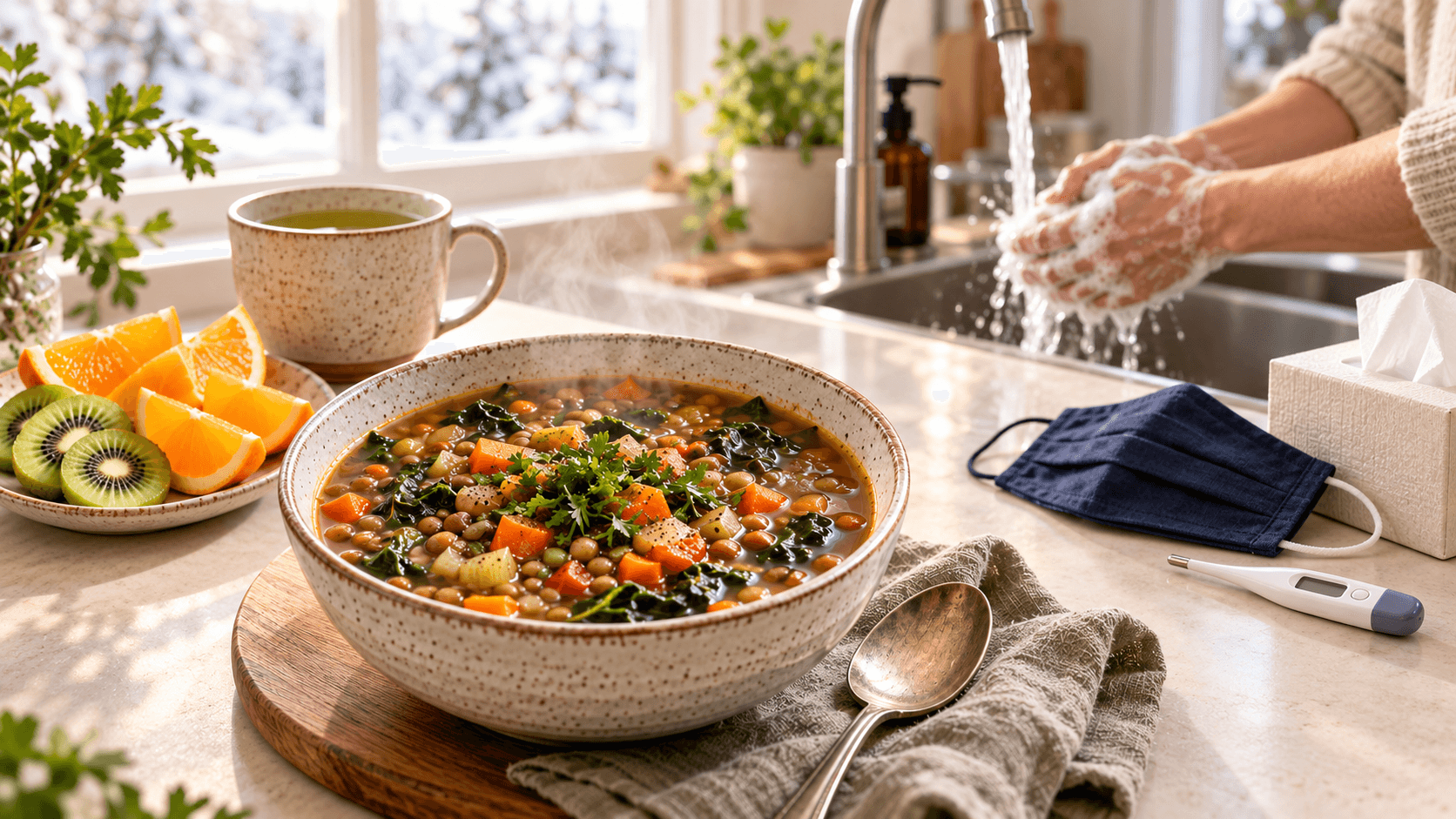
Flu Season Nutrition: Foods & Habits for Immune Support
Flu Season Nutrition: How to Support Your Immune System This Winter
Cozy sweaters, warm drinks, and... sniffles? Flu season is here, and staying well is on a lot of minds. No single food keeps germs away. But research shows that a handful of everyday habits can give your immune system real support all winter long. Here’s what the science says, and how to put it on your plate.
Start With the Basics: Flu Shot and Handwashing
Two habits have the strongest evidence behind them:
Get your flu shot. The CDC recommends a flu vaccine every year for everyone 6 months and older, unless your doctor advises otherwise. If you haven’t had one yet, it’s not too late.
Wash your hands. Large research reviews link regular handwashing to fewer respiratory infections and fewer missed days of work and school.
Think of the tips below as your support team. They help, but they don’t replace these two basics.
Immune-Boosting Foods to Eat This Flu Season
Protein. Your body uses protein to build antibodies and germ-fighting cells.
Add: eggs, Greek yogurt, beans, chicken, fish, or tofu at each meal.
Vitamin C. Getting vitamin C every day won’t prevent most colds. It can make them a little shorter and milder, by about 8% in adults and 14% in kids. Taking it only after you get sick works less consistently.
Add: oranges, kiwi, strawberries, or bell peppers. One red bell pepper has more vitamin C than an orange!
Vitamin D. In a large analysis of clinical trials, vitamin D supplements slightly lowered the risk of respiratory infections. The benefit showed up mainly in people who started out low and who took small daily or weekly doses. Low levels are common in winter, when we get less sun.
Ask: your doctor whether a blood test makes sense for you.
Zinc. Zinc lozenges may shorten a cold by about one-third, but only when you start them within 24 hours of your first symptoms.
Add: beans, nuts, seeds, whole grains, and meat. Check with your doctor or dietitian before taking zinc supplements, since too much can cause side effects.
Fiber. A large share of your immune cells live in your gut. Fiber feeds the healthy bacteria there, and those bacteria make compounds that help keep inflammation in balance.
Add: oats, lentils, beans, fruits, and veggies.
Fermented foods. In a large research review, people who took probiotics were about 25% less likely to catch a cold. The benefits were clearer in kids and younger adults.
Add: yogurt or kefir with “live and active cultures,” kimchi, sauerkraut, or miso.
Garlic, Ginger, and Green Tea: Do They Help?
Garlic: In one small study, people who took a daily garlic supplement had fewer colds (24 vs. 65). Another study found that aged garlic extract made cold and flu symptoms milder. These results are promising, but more research is needed.
Ginger and turmeric: Both contain natural compounds that help calm inflammation. In a recent clinical trial, both lowered markers of inflammation in people with a mild viral infection.
Green tea: A review of 10 studies linked drinking green tea, or gargling with it, to fewer colds and less flu.
Try: cooking with these spices in soups, stir-fries, and oatmeal, and swapping one drink a day for a warm cup of green tea. Check with your doctor or pharmacist before taking herbal supplements. This matters most if you take medications such as blood thinners, are pregnant, or have a chronic health condition.
How Exercise Supports Your Immune System
In a study of more than half a million people, those who got about 150 minutes of activity a week had a 31% lower risk of infections and a 37% lower risk of dying from one. Active people also made more antibodies after vaccines, so exercise may help your flu shot work better. And when active people did get sick, their colds tended to be milder.
Try: a brisk 30-minute walk, 5 days a week. Dancing in your kitchen counts too!
Sleep, Stress, and Hydration
Sleep: In one study, people who slept 6 hours or less were about 4 times more likely to catch a cold after being exposed to a cold virus than people who slept 7 hours or more. Aim for 7+ hours a night, with a consistent bedtime and wake time.
Stress: In a classic study, people under more stress were more likely to get sick after exposure to cold viruses. To lower stress, try a 10-minute walk, a few slow deep breaths, or time with friends.
Hydration: Fluids keep the lining of your nose and throat moist, which is one of your first lines of defense. Herbal tea and broth count too.
Immune Supplements: What Works and What Doesn’t
Elderberry: It probably doesn’t prevent colds. In a study of people with the flu, it didn’t help them recover faster.
Vitamin C megadoses: More isn’t better. Big doses won’t keep you from getting sick.
Vitamin D: It helps mainly if your levels are low, so get tested first.
Zinc: Timing is everything. Start it within 24 hours of symptoms.
A Day of Immune-Friendly Eating
Breakfast: Oatmeal topped with kiwi, berries, cinnamon, and a spoonful of yogurt
Lunch: Lentil and vegetable soup with garlic, ginger, and turmeric
Snack: Kefir or yogurt with a handful of nuts or seeds
Dinner: Baked salmon or tofu with roasted red peppers and a side of kimchi
Sip: Water all day, plus a warm cup of green tea
Your Flu-Season Checklist
This week’s habit: Add one colorful fruit or vegetable each day, and aim for 7+ hours of sleep.
☐ Get your flu shot
☐ Wash your hands often, especially before eating
☐ Include protein at every meal
☐ Eat a vitamin C food daily
☐ Add fiber and a fermented food a few times a week
☐ Cook with garlic, ginger, or turmeric
☐ Move for 30 minutes, 5 days a week
☐ Ask your doctor about checking your vitamin D level
☐ Book a 1:1 session with a Here for Health Registered Dietitian
When to call your doctor: Call if you have trouble breathing, chest pain, a high fever that won’t come down, or symptoms that improve and then suddenly get worse. If you’re at higher risk (age 65+, pregnant, or living with a condition like asthma, diabetes, or heart disease), call early. Flu medicines work best when started soon after symptoms begin.
Get Personalized Flu-Season Nutrition Support
No single food or supplement can keep you from getting sick. What makes the difference is a combination of small, steady habits. Results can also vary by age and health condition, which is why personalized advice helps.
Meet 1:1 with a Here for Health Registered Dietitian for science-based guidance that fits your life:
Insurance accepted. Many plans cover nutrition counseling, often at little or no cost to you.
Personalized support for your age, health conditions, and food preferences.
Virtual sessions that work around your day.
Click here to schedule your session. Not sure about your coverage? Our team will check your benefits for you.
This blog is for general education and is not a substitute for personal medical advice.
Sources: Srivastav 2018 | Chandra 1997 | van Driel 2019 | Martineau 2017 | Jia 2023 | Rondanelli 2018 | Trompette 2018 | Lissiman 2014 | Nantz 2012 | Ali 2021 | Saleh 2025 | Robinson 2021 | Prather 2015 | Cohen 1991 | Hemilä 2013 | Jefferson 2023 | Zhao 2022 | Chastin 2021 | Wieland 2021 | Macknin 2020 | Guppy 2011 | CDC/ACIP 2026–27 Influenza Recommendations

